A Literary Journey into the Soul of Kashmir
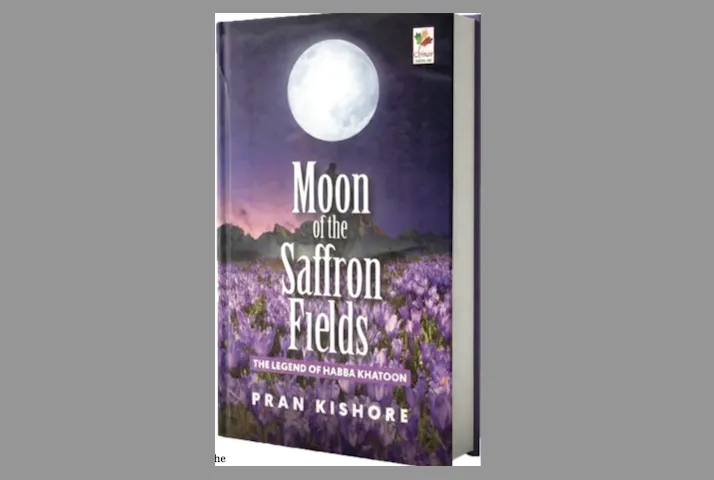
The Legend of Habba Khatoon by Pran Kishore is a powerful and absorbing novel that stands at the confluence of history, culture, poetry, and imagination. Spanning 568 pages, the book is ambitious in scope and rich in emotional depth. It is not merely a historical romance, nor just a fictional biography of a legendary figure; rather, it is a carefully crafted literary work that attempts to understand, humanize, and reimagine a woman who has lived for centuries in Kashmiri memory, folklore, and song.
The novel opens with a strong sense of purpose. From the very beginning, the reader feels drawn into a world that is familiar yet distant, real yet recreated through imagination. There is a quiet urgency in the narrative, created not by dramatic exaggeration but by the careful unfolding of unresolved tensions between characters and situations. The author does not rush. Instead, he allows the story to breathe, trusting the reader to stay with him as the layers slowly reveal themselves.
One of the most impressive aspects of the novel is its structure. The narrative is well planned and thoughtfully arranged, showing the author’s deep understanding of the art of novel writing. Each chapter seems to move the story forward with a specific intention. There are no unnecessary digressions, and even when the narrative wanders into descriptions of landscape, culture, or social life, these elements serve the larger purpose of enriching the story rather than distracting from it. The balance between storytelling and dramatic presentation is maintained throughout, keeping the reader engaged over a long stretch of pages.
It is evident that the manuscript has undergone careful refinement. The writing reflects a discipline where excess has been consciously removed and only what is essential to the story has been retained. This restraint gives the novel clarity and strength. The author never imposes his opinions or moral judgments on the reader. He does not instruct or preach. Instead, he presents situations, actions, and consequences, allowing the reader to form their own understanding. This narrative maturity adds greatly to the credibility and seriousness of the work.
At its core, the novel succeeds because all its elements work together harmoniously. The theme, plot, characters, setting, conflict, point of view, and style are interlinked in a way that sustains the reader’s interest from beginning to end. The story flows naturally, and transitions between different phases of the narrative feel smooth and convincing. The reader is carried forward gently but firmly, guided by the author’s confident hand.
One of the most striking features of the novel is its use of Kashmiri poetry as an integral part of the narrative. The lyrical tradition associated with Habba Khatoon is not treated as a decorative addition but as a living force that shapes character and emotion. The poetry enhances the emotional atmosphere of the story and deepens the reader’s understanding of Zoon’s inner world. The verses blend seamlessly into the narrative, helping the story move forward while also reflecting the cultural richness of Kashmir.
Pran Kishore’s greatest achievement lies in the way he weaves together history and fiction. The novel is set against the backdrop of sixteenth-century Kashmir, a period marked by political uncertainty, cultural richness, and external threat. The author recreates this era with remarkable sensitivity and authenticity. The reader encounters not only rulers and political figures but also peasants, artisans, musicians, spiritual figures, women, and children. Through these lives, the novel presents a complete picture of Kashmiri society of that time.
The cultural landscape of the novel is vivid and detailed. Music, spiritual traditions, folk practices, seasonal rituals, festivals, and everyday customs appear naturally in the story. The author’s familiarity with Kashmiri life allows him to present these elements without artificial explanation. They emerge organically from the lives of the characters, giving the reader a sense of having entered a living, breathing world rather than a reconstructed museum of the past.
Geography plays a vital role in the novel. Rivers, mountains, saffron fields, villages, and valleys are not passive settings but active participants in the story. Nature mirrors human emotion, offering comfort at times and reflecting sorrow at others. The scenic beauty of Kashmir is described with restraint and affection, enhancing the emotional tone of the narrative without overwhelming it.
As a work of fiction, Moon of the Saffron Fields demonstrates Pran Kishore’s strong imaginative power and narrative skill. Fiction remains the true test of a writer’s ability to create believable worlds and compelling characters, and the author succeeds admirably in this regard. His storytelling often carries a visual quality, with scenes unfolding clearly before the reader’s eyes. This cinematic clarity may be attributed to his experience in writing for television, and it gives the novel a wide appeal beyond purely literary circles.
Nostalgia is another powerful element that runs through the book. Readers familiar with traditional Kashmiri life will find themselves revisiting a world that once formed part of everyday existence. The novel recalls forms of music, religious practices, folk theatre, village education, seasonal celebrations, and social customs that have gradually faded from lived experience. These memories are evoked gently, without sentimentality, and serve to strengthen the emotional connection between the reader and the narrative.
The characters in the novel are drawn with care and realism. They are not idealized figures but individuals shaped by circumstance, belief, and social structure. Many of them feel instantly recognizable, as if drawn from real village life. Their names, speech patterns, habits, and reactions reflect a deep understanding of Kashmiri society. Some characters bring warmth and humor, others represent wisdom or endurance, and still others embody social rigidity or cruelty. Together, they create a rich human tapestry.
Among these characters, Zoon stands out as the emotional and narrative center of the novel. Her journey forms the heart of the story. Introduced as a simple and poor village girl, she gradually grows into a woman of exceptional talent, emotional depth, and resilience. Her love for nature, her sensitivity to beauty, and her gift for song are presented as natural extensions of her personality rather than extraordinary traits imposed by the author.
As the story progresses, Zoon’s character develops in complexity. Her early love and disappointment reveal the harsh realities of a society governed by rigid social hierarchies. Economic inequality becomes a decisive force in shaping her fate, denying her the right to choose freely. Her later marriage brings suffering rather than security, exposing the vulnerability of women within oppressive social structures.
Zoon’s eventual meeting with Yusuf Shah Chak marks a turning point in her life. As she becomes Habba Khatoon, queen of Kashmir, her status changes dramatically, but her emotional struggles do not disappear. Power and privilege fail to protect her from political intrigue, betrayal, and loss. Through her story, the novel explores themes of love, sacrifice, separation, and endurance with great sensitivity.
Parallel to Zoon’s personal journey runs the larger political narrative of Kashmir. The novel provides a clear and engaging account of the events that led to the Mughal intervention in Kashmir. Without turning into a history lesson, the author explains the ambitions of the Mughal emperor and the complex political circumstances that resulted in the downfall of the Chak dynasty. The exile and death of Yusuf Shah Chak are portrayed with emotional restraint, emphasizing the tragic cost of political power struggles.
One of the novel’s strengths is its ability to place ordinary people alongside historical figures without diminishing either. Village characters stand with kings, generals, and emperors on equal narrative ground. This approach reinforces the idea that history is shaped not only by rulers but also by countless unnamed lives affected by their decisions. The suffering, loyalty, courage, and resilience of ordinary people receive as much attention as the ambitions of powerful men.
The introduction by Sahfi Shauq adds scholarly depth to the novel, placing it within the broader context of Kashmiri literature and historical imagination. It helps the reader understand the significance of choosing a semi-historical figure as the protagonist and highlights the freedom and responsibility that come with such a choice. The introduction prepares the reader to approach the novel as a work of literary imagination rather than a strict historical record.
The preface by Pran Kishore is equally valuable. It reveals the author’s personal engagement with the subject and the research that inspired the novel. His interest in the political history of Kashmir, combined with his fascination with the emotional bond between Habba Khatoon and Yusuf Shah Chak, provides insight into the creative process behind the book. The preface also reflects the author’s concern for preserving Kashmiri language, culture, and collective memory through fiction.
Ultimately, Moon of the Saffron Fields is a novel that fulfills the deeper purpose of literature. It preserves memory, questions historical narratives, and gives voice to those who exist more in song and legend than in official records. It demonstrates how fiction can serve as a powerful medium for cultural continuity, especially in societies where history has often been fragmented or silenced.
The novel leaves a lasting impression on the reader. Long after the final page, its characters, landscapes, and emotions continue to resonate. It is a work that invites reflection, empathy, and remembrance. In combining readability with literary depth, Pran Kishore has created a novel that appeals to both general readers and serious lovers of literature.
In the final assessment, Moon of the Saffron Fields stands as an important and meaningful contribution to Indian English fiction and to Kashmiri literary heritage. It respects the past without being trapped in it, turning legend and history into a living and engaging story. The novel keeps memory alive while making it relevant for the present. Through this work, Pran Kishore appears not only as a storyteller but as a writer who carefully preserves the emotional and cultural spirit of a civilization.
What makes the book even more special is that, in the form of a novel, it is the first major literary work on Habba Khatoon . In this sense, it becomes a guiding text and an important milestone for future generations. It opens the way for readers and writers to understand Habba Khatoon not just as a figure from the past, but as a lasting influence on Kashmiri culture and thought.
Moon of the Saffron Fields is therefore more than a novel. It is a work that connects past and present and keeps a cultural legacy alive. It is a book that deserves to be read widely—a true must-read.
Peerzada Abdal Mahjoor, Broadcast Journalist, Writer, Translator, former Broadcaster BBC Hindi Service, London
link