


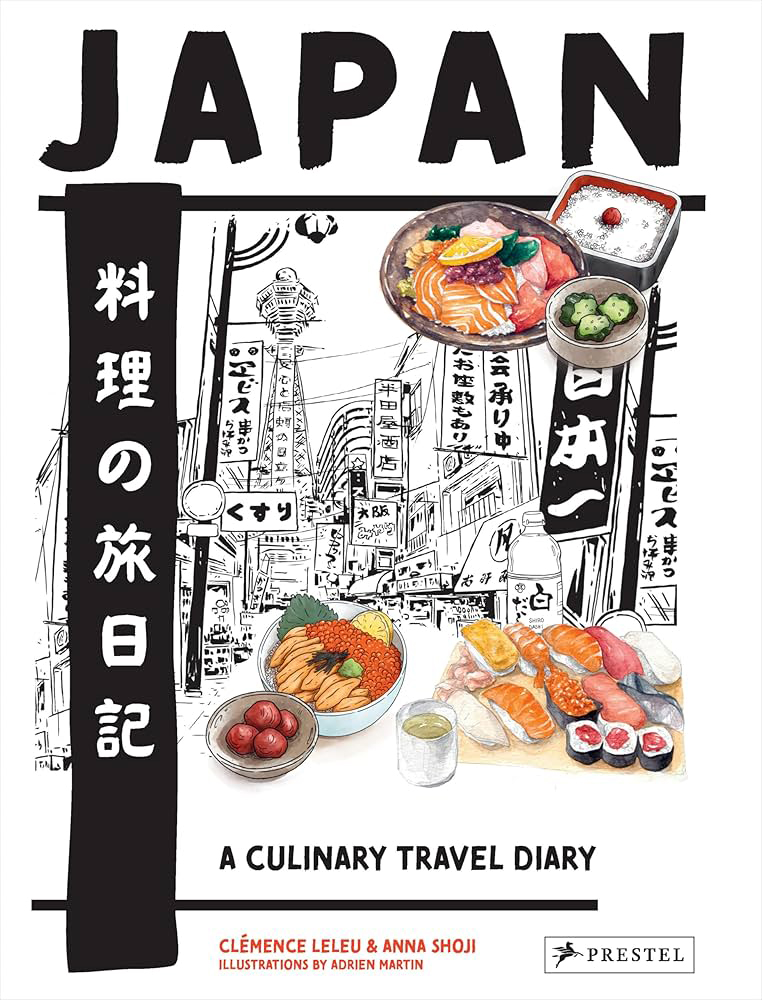

While Tempura, Sushi, and Ramen need little introduction, Tenmusu (Tokyo’s riposte to Tempura), Kaki no ha zushi (Kyoto’s sally to Sushi), and Naporitan (Osaka’s rejoinder to Ramen) challenge the status quo fare of Nihon (Land of the Rising Sun). Japan: A Culinary Travel Diary provides a travel‑in‑time experience through five unique culinary regions of the Japanese archipelago amassing sixty distinct, anomalous recipes from Tokyo, Kansai, Kyushu, Hokkaido and Okinawa.
Washoku, the traditional cuisine of Japan, requires meticulous attention to detail following precise techniques. It is revered worldwide for its simplicity, subtle flavors, and elegant presentation, and is one of the most respected and commanding cuisines in the world. Characterized by a boundless variety of fresh seasonal and regional dishes, it is a testament to culinary excellence—an art form that reflects the country’s history, geography, and values.
Designated an Intangible Cultural Heritage by UNESCO, it embodies a philosophy that emphasizes harmony and respect for ingredients. Washoku places great importance on achieving a balance of flavors, colors, and textures within a meal. Among these key principles, Japanese cuisine also incorporates the “Rule of Five” tastes: sweet, sour, salty, bitter and umami—the savory “fifth taste” blockbuster—an in‑vogue palate preference of chefs and diners wherever premier quality meals are prepared.
Authors Leleu and Shoji are a pair of unique, idiosyncratic “cookbook” writers blending their talents to create an original take regarding the pots and pans kitchen outcomes they encountered during their culinary foragings in Japan. While Clémence composed the narrative, Shoji created the recipes based on the distinct regional dishes they uncovered.
Their remarkable résumés shed light on the rationale behind what might have initially seemed an enigma pairing when envisioning this book.
Clémence Leleu, born and raised in France, earned an MA in Marketing in the U.S. and worked as a digital content creator and brand ambassador for Ethny Corner at Florida International University and Cataleya Boutique, an international women’s clothing store. Since 2015 she has been a freelance journalist specializing in Japanese culture, publishing articles focused on Japan for art and lifestyle magazines. She is currently employed by Tempura Magazine, the first independent French quarterly in Paris disseminating a view of the societal issues, underground culture, subculture and trends in Japan.
Anna Shoji was born in Tokyo and attended a French‑Japanese school. She receive a BA in Geography and MA in Landscape Architecture at the University of Georgia, and worked as a landscape designer for TSW, a firm specializing in landscape architecture. In 2015 she settled in the Touraine province of France, a wine region in the Loire Valley, an hour from Paris. She was the co-founder (with Maki Maruyama) of the micro‑ecovillage Mura, a place “where working women and mothers could come together to relax”. The activities focused on promoting Japanese culinary culture, including making tableware and dye for handmade aprons. The concept of Eco‑villages gained popularity in the 1960s and 70s when communes became more widespread. Today there are thousands of eco‑villages throughout the world.
On their Yasai Farm, partners Shoji and Maruyama grow exceptional organic Japanese herbs and vegetables as well as a mix of local crops for top chefs in Paris and those seeking high quality produce.
Within its 304 pages (and multitude of color photos) the Leleu‑Shoji book covers a myriad of topics within five different geographic regions of Japan. Each location provides a showcase of various Nihon‑koku (Japan) unique culinary dishes that are popular in the area, noteworthy misokoro (places to visit), and a plethora of oishii (delicious) recipes, created by author Shoji based on the nutritional components available and cultural life‑styles of the people who live in the area. In the Tokyo region, for example, the Japanese art of the Bento (lunch box) is featured; the Toyosu Market (heir to the famous Tsukiji Market) is the largest market in the world offering 500 different kinds of fish; a recipe for Kaisendon (cooking time just 30 minutes) is Shoji’s mouthwatering rice and omelette dish garnished with a potpourri of marine munchies: salmon, tuna, sea bream, prawns and salmon roe.
The four other regions include: Kansai, which spotlights the Takoyaki small plates of Osaka’s street food paradise along Dotonbori street; the Shojin Ryori cuisine of Buddhist temples; and the Kissaten coffee culture of Japan. The Kyushu region highlights Japan’s take on Western cuisine with Yoshoku dishes of Karerice, Naporitan and Omuraisu; Yatais (the portable food stalls to visit) ‑ a vanishing Fukoka institution; and a section on the holy trinity of Japanese noodles: Soba, Udon and Ramen ‑ replete with histories and reviews. The Hokkaido region covers Dashi: “a key ingredient in Japanese gastrodiplomacy”; Ainu: the indigenous people of Hokkaido and their culinary culture; and information on Nori, Kombu and Wakame—indispensable Kaisō (Japanese seaweed). The Okinawa region highlights the culinary secrets of Okinawa’s centenarians; a report on Oyama ‑ Land of the Gods and Tofu; Okinawa’s tropical paradise and the U.S. military presence influence on its food, culture and lifestyle. The final chapter, Nominomo is focused on the liquid refreshments of beverages. It includes discussions on Chado (the Tea Ceremony); Nihonshu ‑ Saké, the nectar of the gods; the boom in Japanese whiskey; and for those who have travel in Japan and are probably well aware of: Jihanki ‑ Vending Machine purveyors of sodas, juices, teas, coffees, sports drinks, beer, saké, cocktails, unique Japanese drinks like Calpis, and various flavored milk drinks!
A practical page provides an index of recipes ‑‑ handy for those in search of a particular dish. The book also adapts Japanese home cooking to needs of Western kitchens by using both the metric (e.g., liters), as well as the US Imperial System (e.g., pints); and has sourced the recipes with ingredients easily purchased in both the U.S. and Europe.
The final page supplies resources for continuing “your journey of discovery of Japanese culinary culture”. It includes novels, essays, films, magazines, reviews, picture books, Manga (Japanese comics or graphic novels) and cartoons ‑ a welcome appendage for converts, new and old, who wish to broaden their knowledge regarding Japan.
Washoku, its roots stretching back over a millennium and the depth of its philosophic concepts regarding respect for fresh ingredients, nutritional balance, seasonal representation, might well have been the forerunner of the declarations of sovereigns of the 18th and 19th century. Both Napoleon Bonaparte Emperor of France) and Frederick the Great (Monarch of Prussia) are credited with the familiar quote: “An army marches on its stomach.” It was a strategy these rulers employed to assure victorious campaigns. In the argot of today, it well could have read: “You must eat properly if you want to perform tasks well.”
Leleu and Shoji, from the pages of their JAPAN: A Culinary Travel Diary, have produced an entertaining, enlightening and beneficial read ‑‑ one which the legendary James Beard might have considered worthy of recognition.
link