


The Rise of Culinary Tourism
Forget souvenir shopping. The newest travel trend is collecting flavors. Around the globe, a new kind of traveler is emerging — one whose itinerary is guided less by landmarks and more by what’s simmering on the stove.
Culinary tourism — travel driven purely by food experiences — is no longer niche. From Michelin-star tastings to street-market discoveries, food has become the lens through which many travelers experience a destination.

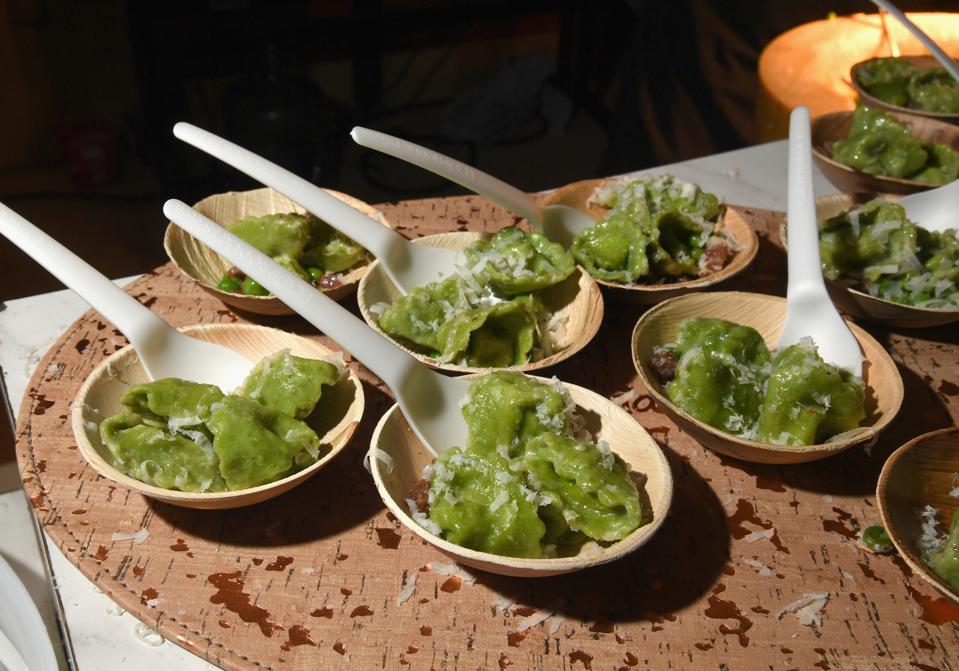
LAS VEGAS, NV – APRIL 28: Pea pesto tortellini is displayed at the Giada booth during the 11th annual Vegas Uncork’d by Bon Appetit Grand Tasting event presented by the Las Vegas Convention and Visitors Authority, Chase Sapphire and Southern Glazer’s Wine and Spirits of Nevada at Caesars Palace on April 28, 2017 in Las Vegas, Nevada. (Photo by Ethan Miller/Getty Images for Vegas Uncork’d by Bon Appetit)
getty
And now, a growing number are taking that passion one step further: traveling specifically for sauce.
Three Saucy Journeys Worth Taking
Even if you’re not chasing condiments full-time, these destinations are redefining what it means to travel for taste.
The Pesto Pilgrimage – Liguria, Italy
In the sun-washed hills above Genoa, the scent of basil drifts through the air. Here, travelers follow ancient trails and terraced farms to discover the birthplace of pesto alla Genovese.
At local workshops, marble mortars and wooden pestles still rule the kitchen as chefs teach visitors the old-world way — crushing basil, pine nuts, Parmigiano, and olive oil into the region’s signature green gold.
For true devotees, the Pesto World Championship (held biennially in Genoa) is the ultimate bucket-list event.
The Mole Trail – Oaxaca, Mexico
In Oaxaca, sauce is storytelling. Each mole — whether the deep, bittersweet negro or the bright, nutty coloradito — tells a tale of family, festivity, and fusion.
Travelers can join local chefs for market tours and cooking classes, grinding chilies on volcanic stone and learning the slow alchemy of building flavor.
To taste mole in Oaxaca isn’t just to eat; it’s to experience centuries of cultural inheritance in a single spoonful.
The Gochujang Journey – Sunchang, South Korea
In Sunchang’s quiet valleys, thousands of earthenware pots bask in the sun — each one brimming with gochujang, Korea’s signature fermented chili paste.
Food travelers visit Sunchang Gochujang Village to see this tradition firsthand. Made with red chili, rice, and soybeans, each batch ferments for months, developing the deep umami heat that defines Korean cuisine.
Workshops let guests try their hand at crafting small-batch versions, tasting how subtle changes in time and temperature alter the flavor.
Sauce Flavor Adventurers
One sauce flavor-chasing adventurers is Brandon Barnes, better known online as The Nod Father. The Houston native grew up in his father’s diner, where he learned early that the right sauce could make or break a meal. Today, he’s turned that early lesson into a global mission — to try every sauce he can find, no matter where it’s made.
Nod Father tries every sauce so you don’t have to
Nod Father
Barnes’ growing YouTube and TikTok following tracks his saucy pilgrimages — from barbecue pits in Texas to ramen counters in Tokyo. What started as a personal project has become a full-fledged exploration of how culture, history, and creativity converge in a single bite.
“I’ll go wherever the flavor takes me,” he says. And often, it takes him far from home.
Whether it’s a whispered tip from a chef or a recommendation from a food-lover online, each sauce becomes a new waypoint — and a reason to catch another flight.
Why Flavor Has Become the New Frontier
Barnes’ journey reflects a broader travel philosophy: authenticity through taste. In an era where travelers crave connection and culture, food offers something that sightseeing can’t — intimacy.
“A sauce tells you everything about a place,” says culinary historian Elena Martinez. “Its ingredients come from the land, its techniques from the people, and its flavor from generations of adaptation.”
For many, sauce has become a gateway to understanding identity — the literal flavor of a region’s soul.
link